Required Reading (Daily Journal 1/2/26)
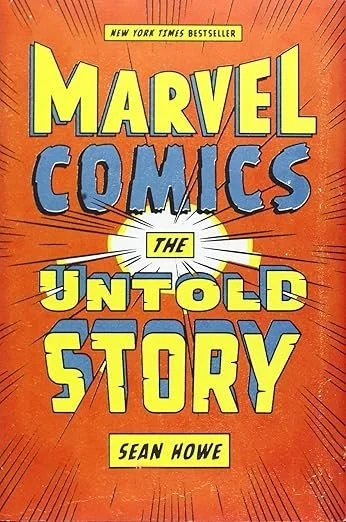
Still not at 100% but feeling much better today than I have been the last few days. I account much of that to simply resting yesterday, rather than busting my ass hauling merchandise and shelving and heavy-ass boxes of books. From noon until around 10pm last night, I sat on the couch and read Sean Howe’s wonderful Marvel Comics: The Untold Story — a thorough and exhaustive history of the publisher, warts and all, from its foundation post WWII all the way up to the formation of the MCU. It’s the type of deep dive nonfiction that I really dig. (Available in hardcover, paperback, audiobook. and Kindle here).
I think I want to start setting aside Sunday afternoon’s for reading. (I know yesterday wasn’t a Sunday afternoon, but it felt like a Sunday afternoon). With no physical store to now worry about, Mary and I can start returning to our favorite restaurant, John Wright in Wrightsville, who’s Sunday brunch buffet is one of the best things about living in Central PA). I think taking one day off from writing every week, and hitting John Wright, and then coming home full of bacon and prime rib and sitting on the couch reading until bedtime is the perfect way to ease into retirement.
So many now-aspiring writers don’t seem to understand how vitally essential reading is to becoming a writer. I wouldn’t be a member of SFWA if you paid me to be (an organization who’s history is even more checkered than HWA) but I do have friends in the science-fiction and fantasy fields, and they tell me of new writers who’ve never read Tolkien, but simply watched the Peter Jackson films, and have never read Frank Herbert, Asimov, Heinlein, Dick, or others — opting instead for film and television adaptations. If they read at all, it’s just the equally uninformed work of their peers, and thus you have a generation with zero knowledge of the history of their chosen genre or what has come before, simply regurgitating and copying each other’s work like some sort of collective biological generative artificial intelligence.
We see some of that in horror, of course, but I would argue that it is not as nearly widespread or pronounced in our genre as it seems to be in science fiction and fantasy. But it is beginning to happen here, and I suspect part of the issue in our little corner of the industry is that, through no fault of our own, we’ve lost a dearth of institutional knowledge with the passing of historians like Karl Edward Wagner, John Pelan, J. F. Gonzalez, and others, and another incredibly knowledgeable individual — S.T. Joshi — hasn’t exactly endeared himself to the mass audience, and indeed, has at times in the recent past gone out of his way to shit on them. We are still lucky enough to have folks like Mark Seiber, Ron Clinton, Stefan Dziemianowicz, David J. Schow, Ellen Datlow, s.j. bagley (sic), Stephen Mark Rainey, John Maclay, and others, but those folks are my age or older, and a new generation of horror writers and horror readers doesn’t know to look to them for recommendations. Instead, social media is full of self-appointed arbitrators who, by their own admission, haven’t read anything in the genre published pre-2010 and whose recommendations are based more on what looks good on Instagram or TikTok rather than what’s good to read or was influential or impacted the genre for ______ reason.
The one resource book I’d love to stick in the hands of every Millennial or Zoomer now interested in the genre would be Jason Cavallaro’s Cracking Spines: Three Decades of Horror, which is just as thorough and exhaustive as Sean Howe’s history of Marvel Comics that I mentioned above. Jason’s book is written from the perspective of a fan and a reader, and is probably the very best recommended reading list for horror fiction published over the last thirty years. You can get it in paperback, hardcover, and eBook here.
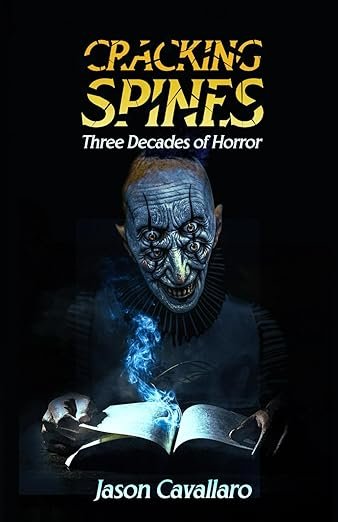
Maybe start there. If you want to write horror, or you want to read more horror, Jason’s book is as good modern day equivalent of the sourcebooks my generation used to rely on — stuff like Stephen King’s Danse Macabre and Karl Edward Wagner’s lists in Twilight Zone magazine and in the pages of Year’s Best Horror Stories. J. F. Gonzalez’s Shadows In The Attic is a good resource, as well (available in paperback and for Kindle here) with the unfortunate caveat that Jesus never got to finish the series before he died.
If you want to be a writer, then you need to read. That’s a rule that doesn’t change. It is not exclusionary or privileged to say this. It is an objective fact. If your feel that your anxiety or ADHD or narcolepsy or some other thing prevents you from reading, you might be interested in these things called audiobooks. “Oh, I can’t focus on those either, Brian.” Okay. There are thousands of videos of writers reading their works on YouTube, TikTok, and elsewhere. Maybe that’s more your speed. And yes, in the great debate of “Do audiobooks count as reading” I vote that they do. Our brains do indeed process the information differently, but you are still experiencing the narrative. And for a writer, you are still experiencing the craft — the dialogue and structure and plotting and characterization.
To become a writer without reading is like becoming a video game designer who has never played video games, but only watched other people play them.
A refrain I often hear is “I just don’t have time to read.” Well, you need to make time to read, the same as you make time to write. Maybe at night when you’re scrolling through your social media feed for half an hour, you put down your device and pick up a book instead.
I’m not one for New Year resolutions, but less algorithms and more books seems like a good thing.