9/22/26
Up at 6am rather than 5am this morning, because as I ease into retirement, I’m trying new things like sleeping in. I could have probably slept longer, but Dallas began softly chewing on my head to let me know that he was in dire need of breakfast. Sighing, I sat u, stretched, assured him breakfast was coming, and checked my phone to see the time. I also saw that 14 ‘Happy Birthday’ text messages had already come in overnight. I keep my phone muted every September 21st and 22nd, because if I don’t, then it’s just a constant DING DING DING of message alerts. Actually, it’s not a ding. The sound my phone makes any time a message is received is the sound of Iron Man’s repulsor rays. For forty-eight hours every year — September 21 and 22 — it sounds like the final battle of Avengers: Endgame.
Why the 21st? Because after thirty some years, about half our industry still haven’t figured out that the 21st is Stephen King’s birthday and the 22nd is mine, so about half the birthday wishes I get each year actually fall on his birthday. The 22nd (my actual birthday) are a mix of more birthday wishes and “Hey, I’;m sorry I missed your birthday yesterday” messages.
If I sound ungrateful, I’m not. But I do have to mute my phone for these two days or I’d get nothing done and go absolutely insane.
~
The latest free episode of KEENEVERSATIONS is now live.
MOVING - Keeneversations - Ep 55
Moving can be stressful for many couples. Doubly so when one of them is in their nesting phase and the other is fully engaged in a great and terrible downsizing. You can guess which of our hosts is which. Chaos ensues, as usual.
Available for free on: Spotify ~ Patreon ~ Brian Keene Dot Com
~
Women In Horror Year: Day 126
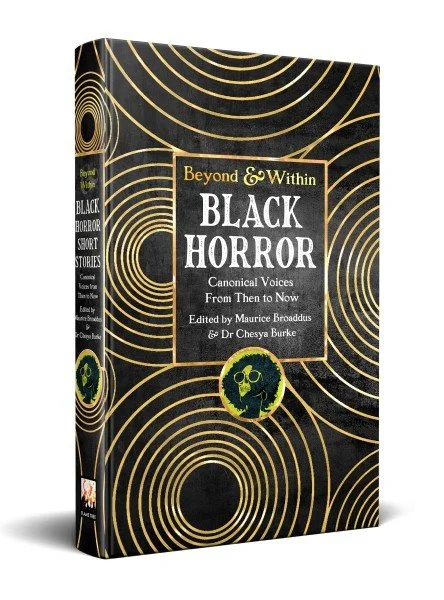
Black Horror: Canonical Voices from Then to Now edited by Dr. Chesya Burke (with Maurice Broaddus)
A stunning collection of Black American horror short stories curated by the prolific author-editor-scholar team of Maurice Broaddus and Dr. Chesya Burke.
Edited by award-winning writer, community organizer and educator Maurice Broaddus and scholar, professor and award-winning author Dr. Chesya Burke, with an introduction by Dr. Burke, Black Horror: Canonical Voices from Then to Now is a landmark anthology offering the evolution of Black American literary horror while boldly imagining its future. The stories within recognize the legacy of Black horror, its literary milestones, cultural roots, and innovative voices, while pushing the genre into new, daring territory. Authors featured in the anthology include: Tananarive Due, P. Djeli Clark, Linda D. Addison, Brandon Massey, Justina Ireland, Jewelle Gomez, Sheree Renee Thomas, Wrath James White and Victor Lavalle. It also includes a small selection of stories chosen from open submissions. This book revels in the power of horror to unsettle, illuminate, or transform, while drawing from Black American cultural histories, mythologies, and lived experiences; it will surprise you with fresh nightmares, folklore, and futures, honoring the past while writing fearlessly toward tomorrow.
The Flame Tree Beyond and Within short story collections bring together tales of myth and imagination by modern and contemporary writers, carefully selected by anthologists, and sometimes featuring short stories from a single author. Overall, the series presents a wide range of diverse and inclusive voices with myth, folkloric-inflected short fiction, and an emphasis on the supernatural, science fiction, the mysterious and the speculative. The books themselves are gorgeous, with foiled covers, printed edges and published only in hardcover editions, offering a lifetime of reading pleasure.
The story and history of modern Black Horror Fiction is not mine to tell, but it’s one I was lucky and privileged enough to see happen in real time, and be there on the ground as it occurred. With that in mind, Black Horror: Canonical Voices from Then to Now was an eagerly anticipated read for me, for multiple reasons. First, it is edited by two friends whom I dearly love and respect. Secondly, it contains stories by many other dear friends whom I also love and respect. And third — horror fiction history geek that I am — it is (to the best of my knowledge) the first book length work to focus on that part of our genre’s history. Showcasing veterans like Wrath James White, Tananarive Due, Linda Addison, and Brandon Massey, as well as relative (depending how old you are) newcomers like Justina Ireland and Victor LaValle, this anthology uses a wide range of voices to trace the evolution of Black American horror fiction from 1990 to the present. And again, as somebody who was lucky enough to witness that history happening, and who counts several of the anthology’s contributors as among his best friends, it is a wonderful book to read.
But — on a personal level — it was also eye-opening and illuminating. Chesya’s remarkable foreword… okay, this is where me not paying attention in high school comes into play. If I am both writing about a friend and writing about them as a professional, do I use “Chesya” or do I use “Dr. Burke”? Because she fought like hell and worked her ass off to get that degree and title, and she deserves all the respect that comes with it. If I were introducing her to a crowd, I’d say, “Dr. Chesya Burke”. But if we were hanging out in Maurice’s garage, I would call her Chesya. And since this Blog has always been an intimate and informal thing, I’m gonna go with that.
(By the way, in the time since I began writing this morning’s Blog and the time I got to this paragraph, there are now 11 more Happy Birthday text messages. Even though my phone is muted, the notification still pops up on the screen of my Mac as I type this).
But I digress.
Chesya’s remarkable foreword is worth the price of the anthology alone. Only eight pages in length, it is hopeful and celebratory while simultaneously challenging and uncomfortable. Without spoilers, at one point in the foreword, she rights about something she experienced at a convention early in her career. It’s something I remember being told about the same weekend it happened. It’s something I remember being shocked by. And then it’s something that I shamefully forgot about over time, until a few years ago when I was reminded of it all over again. Reading about it here got me thinking about experiences. Yes, we can be good allies. Yes, we can have empathy. And while we may think we have empathy and we may think we understand the experiences of our Black friends and peers, we will never truly understand what it is to experience those experiences. Because if we did, I wouldn’t have forgotten about it in the first place. We can say “I’m sorry that happened” but eventually, we move on — something the person that it happened to can’t do so easily. I should also note that reading about it here and reflecting upon it again made me realize pretty uncomfortably that I didn’t do such a great job at listening to Black women 25 years ago. I’d like to think I do a better job of it now.
But as I said, the foreword is ultimately hopeful and celebratory, and with good reason. In marking the evolution of Black horror fiction over the last thirty years, we get a sense of where it is going and what the future may bring. Suffice to say, you ain’t seen nothing yet. This is a triumphant and important anthology, and I am proud of those involved. If you’re a horror fiction fan, you should be, too.
Black Horror: Canonical Voices from Then to Now is available as a beautiful trade hardcover from Flame Tree Press.