9/1/26
New episode of KEENEVERSATIONS is now free to listen to. This week I am joined by Elizabeth Bear and Scott Lynch:
Forging a career in publishing is always a challenge. Earning a living in the market is more challenging still. Learn about skills and strategies for making your work pay off over the long term, as Brian Keene, Elizabeth Bear, and Scott Lynch discuss.
Available on: Spotify ~ Patreon ~ Brian Keene Dot Com
~
A reminder that the paperback and digital editions of BENEATH THE LOST LEVEL are now available for preorder. Release Date is December 15th, 2026 but if you preorder now, you’ll save 30%! Click here to reserve your copy direct from the publisher.
And a reminder that the signed, limited edition hardcover of FALLING ANGELS: THE LABYRINTH Book 4 is available for preorder, as well. Release Date is December 2026. Click here to reserve your copy.
~
Women In Horror Year: Day 115
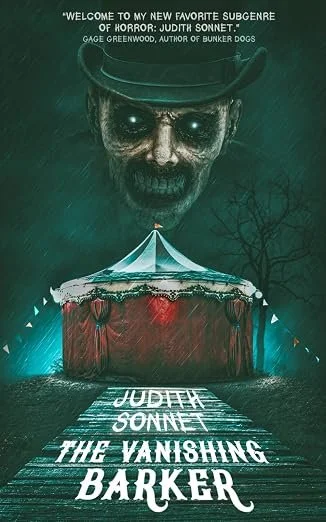
The Vanishing Barker by Judith Sonnet
"Come one . . . come all . . ."
There's something wrong with the carnival barker. Something creepy. And yet, his words pull young Terrence toward the funhouse. Toward the open door. Toward the dark . . .
"Come one . . . come all . . ."
After the boy, the barker, and the funhouse disappear, Terrence's brother and sister call their grandfather, a tough-as-nails ex-baseball player. They decide to investigate the carnival themselves that same night, well aware that the police won't believe their fantastic story!
"Come one . . . come all . . ."
Inside the funhouse, an ancient evil awakens in its coffin. Thirsty for blood, the barker's sinister master has a dark plan for Terrence and his family!
"Come one . . . come all . . . and be devoured!"
This book (and this subsequent review) is not Extreme Horror, which might surprise you. Raised on a steady diet of Richard Laymon, Jack Ketchum, Edward Lee, David J. Schow, Skipp & Spector, as well as those of us who studied at their feet (myself, Wrath James White, J.F. Gonzalez, etc) Judith Sonnet quickly established herself as one of the most powerful and popular new voices in both Extreme Horror and Splatterpunk. Her prose style, plots, and set ups definitely fell into that first genre category, with enough gore and grue to make even Edward Lee wince. But there was a socio-political sensibility, a sardonic and obsidian humor, and ruthless emotional stakes that firmly marked her work as Splatterpunk, too. She stood proudly between both camps, and thus dominated the field in a way few women, save for harlee Jacob or Christine Morgan, have before her.
But I knew a secret. I mean, I guess it wasn’t a secret. A canny reader could see it there in her prose. Judith was about more than just those two subgenres. She’d read more than them. And she could write more than them. And The Vanishing Barker is a superb example of this. This is nothing short of mainstream Horror. The Richard Laymon influence still shines through strong, but so does the influence of Ray Bradbury, Stephen King, and I dare say myself (in the novel’s portrayal and characterization of an elderly protagonist that can give Teddy Garnett a run for his money). It has more in common with Salem’s Lot or particularly The Traveling Vampire Show than it does with The Bighead or The Pig or her own earlier works. It’s a remarkable evolution to traditional horror, and she makes that passage seamlessly. I can’t wait for the mainstream horror audience to discover this jewel.
The Vanishing Barker is available in paperback and audiobook.