8/10/26
Signed collector’s edition of FALLING ANGELS: THE LABYRINTH Book 4 went up for preorder yesterday. You can reserve your copy here.
Yesterday’s newsletter has a lot more about the book, as well.
~
Women In Horror Year: Day 99
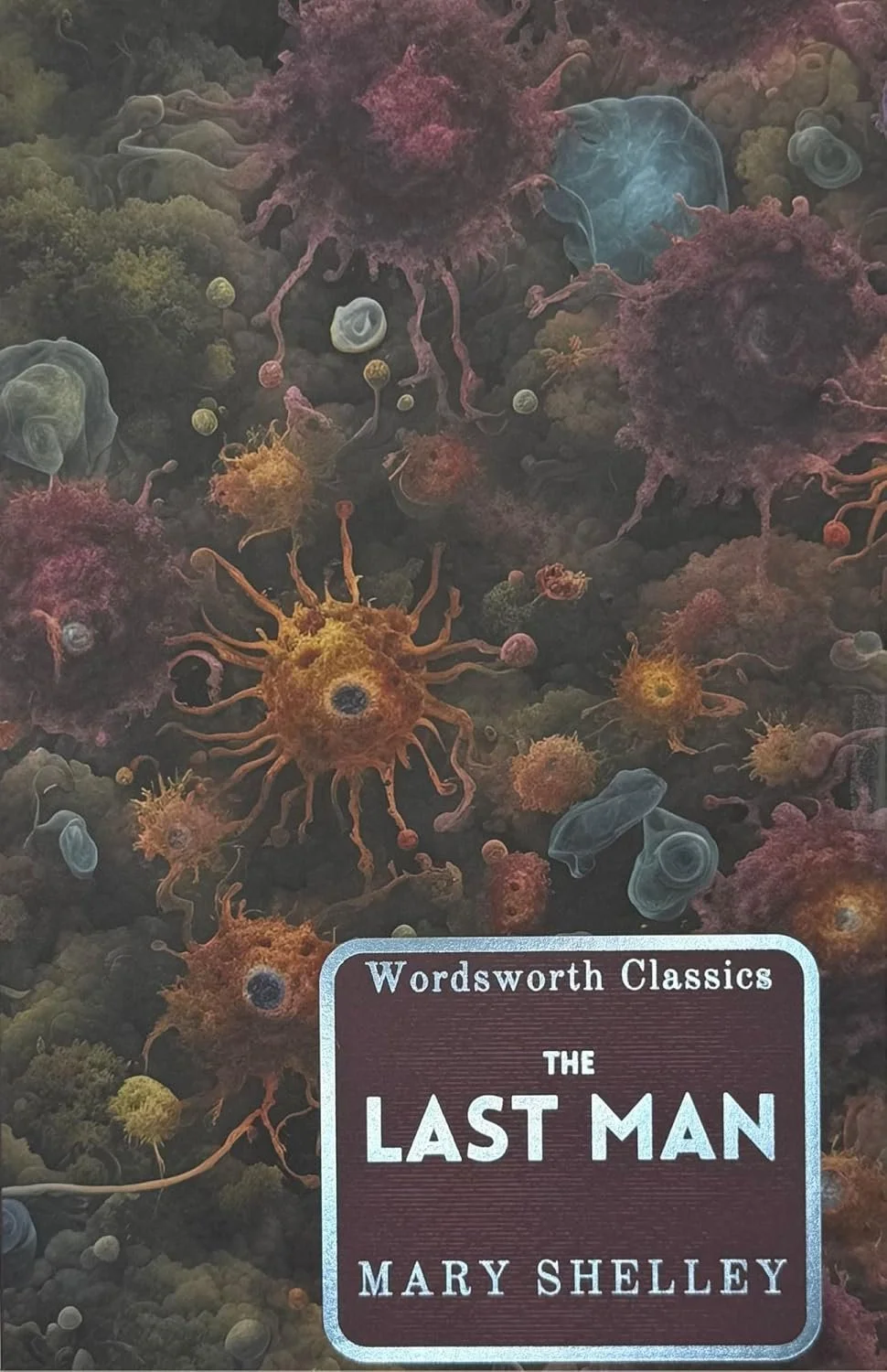
The Last Man by Mary Shelley
The Last Man is Mary Shelley's apocalyptic fantasy of the end of human civilisation. Set in the late twenty-first century, the novel unfolds a sombre and pessimistic vision of mankind confronting inevitable destruction.
Predating M.P. Shiel’s The Purple Cloud by nearly 75 years, Mary Shelley’s The Last Man, first published in 1826, was largely forgotten by most of the world until the early 1970s, and then received much more attention during the 2020 Covid-19 pandemic. A bleak, so-dark-it’s-obsidian post-apocalyptic novel, The Last Man tells the story of the slow extinction of humanity due to the global spread of a particularly virulent strain of the bubonic plague. It is widely considered one of fiction’s first dystopian tales. It is also a deeply personal novel. The main characters are thinly veiled stand-ins for Shelley herself, as well as her husband Percy and their friend Lord Byron, both of whom were dead by the time she wrote the novel. Having lost all but one of her children, as well, the book is dominated by themes of lonliness and isolation. The main character watches their friends and loved ones die one by one, watches everything they ever knew or believed in or worked for collapse all around them, and yet is cursed to go on, alone.
Yeah, that hit me in a very personal way when I first read it.
But Shelley doesn’t stop there with this deeply personal exorcism and confessional. The ideals and beliefs her friends and loved ones championed are also called into question in The Last Man. Horror fiction has always been a great vehicle for socio-political commentary (when done right), and we see that here. Literary scholar Kari Lokke said of The Last Man, "in its refusal to place humanity at the center of the universe, its questioning of our privileged position in relation to nature, then, The Last Man constitutes a profound and prophetic challenge to Western humanism. Shelley, in making references to the failure of the French Revolution and the Godwinian, Wollstonecraftian, and Burkean responses to it, attacks Enlightenment faith in the inevitability of progress through collective efforts".
Ultimately, after three acts, the character Shelley based on herself is left alone, quite probably the last man from which the book takes its title. And yet she can’t help but leave the reader — and herself — with a sliver of hope that perhaps there are still others out there, and that the loneliness the character feels may be abated… in time.
And yeah, that hit me in a very personal way, too, when I first read it.
I know the book is heralded as the first dystopian horror / science fiction novel, but folks, I’d like to present to you the argument that this was one of the first works of grief horror, because it is Mary Shelley’s grief over the loss of her friends and loved ones that wholly fuels this narrative.
The Last Man is widely available in all sorts of editions, including these nice paperback and ebook editions published by Wordsworth.