I made a joke when Mary and I moved here about wondering how long it would take for word to get out on the feral cat network. Turns out, it took about a month. Last night, after dark, I passed through the kitchen on my way to make Mary a tea, and I spotted a brown and white cat next to one of our outbuildings, captured there in the glow of the dusk-to-dawn light. Sighing with a mixture of bemusement and frustration, I dumped a can of cat foord onto a paper plate and took it outside, at which point the cat fled into the woods. I left the food out there, but the cat had not come back by bedtime (11pm). The food is gone this morning, so either the cat got it, or a raccoon or possum or coyote or fox or bear or anything really.
I suppose I’ll have to look again tonight, and if it’s there, repeat the process.
~
Women In Horror Year: Day 150
Annabelle by Ruby Jean Jensen
Make Believe Terror
Jessica liked to play make believe in the old abandoned stone mansion. She liked to pretend that the beautiful golden haired woman in the portrait was her mother. And that the big dollhouse she had found upstairs was hers, along with the family of dolls who lived there. Sometimes she was sure the dolls moved all by themselves. Sometimes she even heard them whisper to her. Only instead of calling her Jessica, they always called her Annabelle.
Life Like Horror
Annabelle had come back to them. The dolls had lived for so long by themselves. With no one to dust them off, play with them or love them. But now Annabelle had come back. And everything would be just like it was before. Only this time, they would never let anyone hurt Annabelle. And anyone who tried would soon discover that pretty dollies can have very ugly tempers.
Millennials, Gen Z, and newcomers to horror fiction might be forgiven for thinking this classic work is based on the Annabelle doll made famous by the Warren Museum, but it is not. This Annabelle, published by Zebra Books back in 1987, and gaining a new lease on life thanks to Grady Hendrix’s Paperbacks From Hell, pre-dates that film franchise. (Indeed, I suspect it was this novel that probably influenced their museum piece in the first place, rather than any supposed “real life” encounter).
Five-year-old Jessica, a little girl from the backwoods bayous of Louisiana, who’s mother has abandoned her and who’s father is at loose ends working a job and raising her on his own — begins playing inside the abandoned, decrepit mansion next door (which she imagines is a castle). She is particularly drawn to one dusty, cobwebbed bedroom which holds a massive dollhouse and a bunch of dolls. In typical 1980s horror fiction fashion, things soon go terribly awry inside the mansion. Rocking chairs move on their own, and then the dolls begin moving on their own, as well. They call Jessica not by her name, but by “Annabelle”. And things get worse for her — and the town — from there.
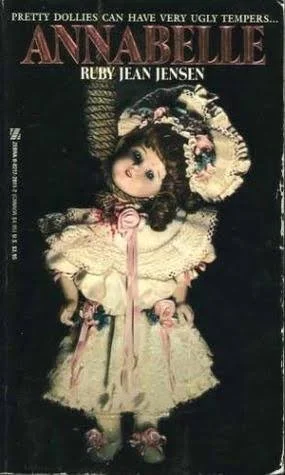
Zebra were known for their garish covers, but much like the original cover to Jack Ketchum’s The Girl Next Door, the classic cover for Annabelle (reproduced below) undersold the novel. Readers expecting pulp will be surprised to find a tightly written, slow-building gothic tale that doesn’t fully ramp up and embrace the full terror until its last few chapters. As essential to Ruby Jean Jensen’s backlist as The Shining is to that of Stephen King, Annabelle is a seminal, quintessential work of horror fiction — one that has inspired countless newer writers such as Regina Garza-Mitchell and Somer Canon. And unlike so many of the Zebra Books titles of old, it is back in print.
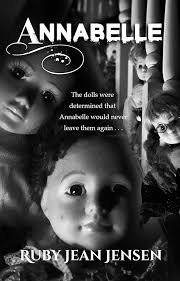
Annabelle is available in hardcover, paperback, and eBook from Gayle J. Foster. Here is the new cover and the vintage cover.